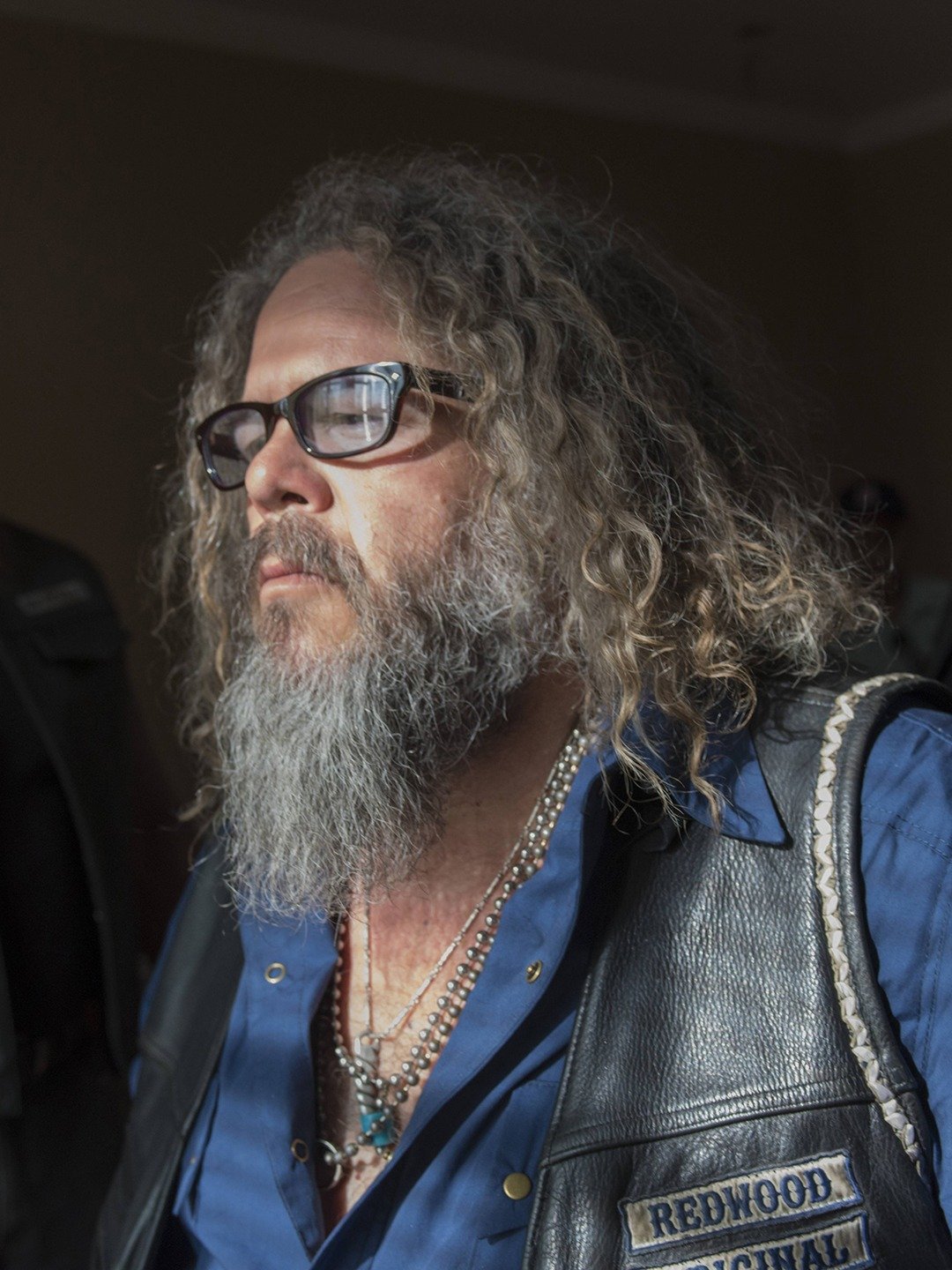
The roar of Harleys, the tangled web of family loyalty, and the relentless pursuit of justice (or vengeance) – Sons of Anarchy hooked millions, and even years after its final ride, the exhaust fumes of debate and speculation still hang heavy in the air. When it comes to Critical Reception & Fan Theories for SOA Season 4, the discourse ignites a passion that rivals any SAMCRO clubhouse brawl. This isn't just about what happened on screen; it's about what could have happened, what it all meant, and the intricate tapestry of a show that invited us to interpret its every stitch.
Season 4, in particular, was a watershed moment. It peeled back layers, revealing the rot beneath Charming's surface and setting Jax Teller firmly on his tragic path to the presidency. It introduced game-changing characters, shattered alliances, and pushed the narrative into darker, more complex territory, fueling an explosion of fan theories that continue to be dissected and debated today.
At a Glance: Diving Deep into SOA Season 4
- Season 4's Critical High: Widely praised for its intense drama, character development, and narrative ambition, often considered a peak season.
- Kurt Sutter's Influence: Creator Kurt Sutter actively encouraged fan interpretation, fostering a vibrant community of theorists.
- Theories Galore: From character identities to hidden motivations and alternate endings, fans crafted elaborate explanations for the show's mysteries.
- Persistent Popularity: SOA's enduring appeal, bolstered by spinoffs like Mayans M.C., keeps these discussions alive.
- Key Debates Explored: We'll break down the most compelling theories, including Lincoln Potter as JT, Wendy as Adriana La Cerva, the Homeless Woman as Morrigan, and many more.
Why Season 4 Remains a Fan-Theory Hotbed
Sons of Anarchy was never a simple watch. Creator Kurt Sutter masterfully wove together Shakespearean tragedy, Greek myth, and a gritty biker aesthetic, creating a world ripe for deeper analysis. Season 4 intensified this. It saw Jax's return from prison, Clay's increasingly desperate power plays, and the introduction of Assistant U.S. Attorney Lincoln Potter, whose intricate RICO investigation threatened to dismantle SAMCRO from within. The stakes felt higher, the betrayals more profound, and the morality of every character more ambiguous.
This narrative complexity, combined with Sutter's own penchant for symbolism and mystery, naturally gave rise to a sprawling landscape of fan theories. Viewers didn't just consume the show; they became detectives, piecing together clues, connecting dots, and proposing alternative realities that often felt as plausible as the on-screen events. The ongoing popularity of the series, even years later, and the excitement around new spin-offs like Mayans M.C. and the planned "First 9" prequel, attest to the enduring power of these conversations. If you're looking to revisit the season, you can often find Sons of Anarchy Season 4 online on various streaming platforms.
The Critical Pulse: How Season 4 Was Received
Critics and audiences alike generally heralded Season 4 as a triumphant return to form, arguably one of Sons of Anarchy's strongest seasons. After the somewhat divisive Irish arc of Season 3, the show came roaring back to Charming with renewed focus on the internal strife of SAMCRO and the Teller-Morrow family.
Reviewers lauded the performances, particularly Charlie Hunnam's increasingly tormented Jax, Ron Perlman's menacing and desperate Clay, and Katey Sagal's indomitable Gemma. The season was praised for its intricate plotting, balancing the overarching RICO threat with the intense personal drama and escalating internal conflicts. Many critics noted the Shakespearean echoes growing louder, as Jax's journey toward the presidency became less about liberation and more about a grim, inescapable destiny.
The introduction of Lincoln Potter (played by Ray McKinnon) was a critical highlight, providing a uniquely eccentric and intelligent antagonist who operated outside the typical gangland power struggles. His methodical, almost philosophical approach to bringing down SAMCRO offered a fresh dynamic. While the violence remained gratuitous at times, critics largely agreed it served the story, underscoring the brutal realities of the outlaw life. Season 4 positioned Sons of Anarchy as a mature, complex drama, cementing its place among the prestige television offerings of its era.
Unpacking the Vault: The Most Heated Fan Theories of SOA Season 4 and Beyond
Now, let's dive into the fascinating world of fan theories that have kept the Sons of Anarchy community buzzing. These aren't just idle speculations; they're deep dives into character motivations, plot mechanics, and the very fabric of the show's universe.
The Lincoln Potter is John Teller (JT) Hypothesis
This theory is perhaps one of the most outlandish yet strangely compelling. It posits that Assistant U.S. Attorney Lincoln Potter, who arrives in Season 4 to take down SAMCRO with a RICO act, is actually Jax's biological father, John Teller.
The Theory: John Teller, disillusioned with the club and fearing for his life at the hands of Clay and Gemma, faked his death with the help of Wayne Unser. He then underwent reconstructive surgery, assumed a new identity as Lincoln Potter, and returned years later. His mission? To systematically dismantle SAMCRO and expose Clay and Gemma's corruption, perhaps as a twisted form of protection for Jax and his legacy.
Supporting Evidence:
- Intellectual & Strategic Prowess: Potter is incredibly intelligent, strategic, and calm under pressure – qualities one might attribute to a former club founder trying to bring down his own creation.
- Eccentric & Biker-esque Style: Despite being a government agent, Potter has a distinct, almost counter-culture aesthetic. He's often seen with long hair, leather jackets, and an overall demeanor that's somewhat out of place for his profession but eerily familiar to the biker world. His "vibe" often felt more akin to a philosopher-outlaw than a federal agent.
- Deep Understanding of SAMCRO: Potter demonstrates an almost intuitive understanding of SAMCRO's inner workings, psychology, and vulnerabilities, which a former insider like JT would possess.
Plausibility: While wildly imaginative, the theory mostly crumbles under scrutiny given the show's canon. However, it speaks to the depth of Sutter's character writing that a seemingly unrelated character could spark such a fundamental reinterpretation of the show's core mythology.
Wendy Teller: Witness Protection Adriana La Cerva?
This cross-over theory connects Sons of Anarchy to another HBO crime drama titan, The Sopranos, through the character of Wendy Case, Jax's ex-wife and mother of Abel.
The Theory: Wendy, played by Drea de Matteo, is actually Adriana La Cerva from The Sopranos. After being revealed as an FBI informant, Adriana was brutally murdered. This theory suggests she somehow survived, entered witness protection, and relocated from New Jersey to California, taking on the identity of Wendy.
Supporting Evidence:
- Shared Actress: Both characters are played by Drea de Matteo, who has a distinctive look and a recognizable accent.
- Similar Issues: Both Adriana and Wendy struggled with addiction, toxic relationships, and a yearning for a life outside the criminal underworld.
- The "Trunk" Line: The most compelling "evidence" comes from a later season (not Season 4, but a retrospective fan observation). Nero Padilla, annoyed with Wendy, jokingly warns her, "don't [make me mad] or you'll be riding in the trunk." Wendy's chilling reply: "it won't be the first time." This line directly references Adriana's likely fate in The Sopranos – being driven to her execution by Silvio Dante in a car trunk.
Plausibility: This is a fan theory born more from a love of meta-narrative and a shared actress than strict plot adherence. It's an enjoyable nod for fans of both shows, a fun "what if" rather than a serious canonical possibility.
Was Clay Morrow Jax’s Biological Father?
This theory strikes at the heart of the Teller family legacy, questioning the very paternity of the show's protagonist.
The Theory: Clay Morrow and Gemma Teller-Morrow were romantically involved before Jax was conceived. Gemma became pregnant while John Teller was in Belfast with Maureen Ashby. To maintain the illusion of family and protect SAMCRO's founder, John Teller's name was put on Jax's birth certificate, though Clay may have always harbored suspicions or even known the truth.
Supporting Evidence:
- Gemma & Clay's History: Their intense, almost primal bond and the obvious depth of their long-standing relationship suggest a connection that predates John Teller's death.
- Gemma's Manipulative Nature: Gemma was fiercely protective of her position and her son, and capable of elaborate deception. Concealing Jax's true parentage to stabilize her life and secure her future within the club is well within her character.
- Clay's Protective Instincts (and Jealousy): Clay often showed a complicated mix of paternal protectiveness and deep-seated resentment toward Jax, which could be explained by a secret paternity – a son he couldn't openly claim, who also represented the legacy of his rival.
Plausibility: While the show strongly implies John Teller is Jax's father, the complex, incestuous nature of the Teller-Morrow dynamic makes this theory resonate. It adds another layer of tragic irony to Jax's struggle against Clay.
Chibs Telford: Still Playing for the True IRA?
Chibs Telford, Jax's loyal right-hand man and a father figure, has a deep and painful history with the Real IRA. This theory suggests his loyalties might have been more complex than they appeared, especially in Season 4 as SAMCRO became increasingly embroiled in gun running.
The Theory: Chibs, despite his loyalty to SAMCRO, maintained a covert allegiance to the "True IRA." His actions, particularly in pushing Jax toward certain conflicts, were subtly designed to eliminate rival gangs (like Marks and the One-Niners) and other foreign players, ultimately clearing the way for the True IRA to re-establish control over the gun trade through a rebuilt SAMCRO, with Chibs potentially at its head after Jax's inevitable downfall.
Supporting Evidence:
- Deep-Rooted Irish Ties: Chibs' past with Jimmy O'Phelan and his continued connections to the Real IRA are well-documented. Old loyalties die hard, especially in the world of outlaw clubs and paramilitary groups.
- Strategic Manipulations: Chibs is intelligent and calculating. While seemingly supportive of Jax, he rarely questioned the violent paths Jax chose, and often seemed to encourage the escalating conflicts that benefited SAMCRO's (and by extension, the IRA's) gun business.
- Ultimate Survivor: Chibs ultimately became president of SAMCRO. This theory suggests his long game was a quiet, steady ascent, clearing the board for a new, more compliant regime.
Plausibility: This theory challenges Chibs' image as the perpetually loyal, moral center of SAMCRO. While his deep loyalty to Jax is undeniable, the underlying currents of his Irish past make this a compelling, albeit dark, interpretation of his character.
The Homeless Woman as the Goddess Morrigan
One of the most enduring and widely accepted theories revolves around the mysterious homeless woman who appears at pivotal moments, particularly for Jax.
The Theory: The homeless woman is not a literal person, but a supernatural entity, specifically the Celtic goddess Morrigan. Morrigan is a goddess of battle, strife, and sovereignty, often associated with ravens, who appears to mortals to foretell death or choose who will fall in battle. This aligns perfectly with SOA's strong thematic ties to Irish mythology and the idea of fate.
Supporting Evidence:
- Key Appearances: She appears at moments of profound significance and impending death for Jax or those close to him:
- After the car accident that kills Jax's first wife (season 1).
- Outside the church where Opie and Lyla marry (season 3).
- Giving Jax John Teller's manuscript (season 4).
- Feeding bread to a raven before Tara's death (season 6).
- Offering Jax bread and wine before his final ride, telling him "It's time" (season 7).
- Symbolism: Her association with ravens, death, and fateful encounters directly mirrors Morrigan's mythology.
- "This is all you have left": Her poignant line to Jax, referring to her bread, could be interpreted as a divine offering or a reminder of the few sacred things remaining in his life.
- Sutter's Acknowledgment: Kurt Sutter himself has implied the supernatural or symbolic nature of the woman, leaning into the Morrigan interpretation.
Plausibility: This theory is highly plausible and widely embraced by fans, often considered canon given the heavy mythological and symbolic undertones of the show. It provides a powerful, spiritual layer to Jax's tragic journey.
Jax's Ending: Was It All a Dream?
The ambiguity of Jax's final ride led many to wonder if his ultimate sacrifice was real, or merely a tragic hallucination.
The Theory (combining Kurt Sutter's playful idea and fan speculation):
- Kurt Sutter's "Dream Ending": Creator Kurt Sutter once jokingly suggested his "dream ending" would be Jax waking up from a dream, hopping on his Vespa, and riding to Starbucks where Wendy is a barista – a classic Dallas style "it was all a dream" trope.
- Fan Theory: Jax didn't die. Instead, he wakes up in Abel's NICU room, holding John Teller's manuscript, deeply shaken by the terrifying visions of the life he almost lived. Tara then walks in, alive and well, signifying that the entire series, or at least the violent spiral Jax endured, was a vivid nightmare.
Supporting Evidence: - Psychological Trauma: Jax endures immense psychological trauma throughout the series. A dream sequence could represent his darkest fears playing out.
- Circular Narrative: The ending would bring Jax back to the beginning, with the manuscript, highlighting the cyclical nature of violence and the potential for a different path.
- Wish Fulfillment: Many fans longed for a less tragic ending for Jax and Tara, making this a hopeful, if unlikely, interpretation.
Plausibility: While an emotional wish, the show's gritty realism and commitment to consequences make a "dream ending" highly improbable within the established tone. Sutter's comment was a joke, and the fan theory, while poignant, doesn't align with the show's narrative integrity.
Gemma Teller-Morrow: The Personification of Anarchy
Gemma Teller-Morrow, the fiercely protective matriarch, is undeniably the fulcrum around which much of SAMCRO's drama revolves. This theory elevates her role to a symbolic level.
The Theory: Gemma is not just a character; she is the living embodiment of "Anarchy" itself within the Sons of Anarchy universe. She represents the chaos, the self-destruction, the loss, and the pain that Jax constantly fights against, yet is inevitably drawn to. Everything she attempts to protect – her family, her club, her legacy – is ultimately destroyed by her own lies, manipulations, and the inherent anarchy she propagates.
Supporting Evidence:
- Source of Chaos: Gemma consistently instigates or exacerbates conflicts through her lies, secrets, and manipulations, particularly after Tara's death. Her actions directly lead to devastating consequences.
- Destroyer of What She Loves: Her attempts to "protect" her family and the club lead directly to their unraveling and the deaths of those closest to her, including Tara and ultimately, herself at Jax's hand.
- Symbolic Matriarch: As the matriarch, she represents the foundational, albeit destructive, force that shaped SAMCRO's culture and Jax's destiny.
Plausibility: This theory holds significant weight. Given the show's title and its exploration of chaos and order, framing Gemma as the personification of anarchy provides a profound allegorical interpretation of her character and her impact on the narrative.
Jax Faked His Death and Entered Witness Protection
Jax's final ride, while visually definitive, still left enough room for some fans to imagine an escape hatch.
The Theory: Jax didn't actually die by crashing into the semi-truck. Instead, he made a deal with the authorities, providing crucial information. The "accident" was staged by law enforcement to fake his death, allowing him to enter witness protection. He then reunited with Wendy and his children, Abel and Thomas, perhaps at Nero's ranch, living a quiet life away from the club.
Supporting Evidence:
- Desire for His Sons' Future: Jax's ultimate goal was to break the cycle of violence for his sons. Faking his death would be the only way to truly remove them from the club's influence and give them a chance at a normal life.
- Law Enforcement Connections: Throughout the series, Jax often found himself making uneasy alliances or deals with various law enforcement figures.
- Ambiguity of the Crash: While it looks fatal, the specific details of the collision are obscured, leaving a sliver of doubt for some viewers.
Plausibility: This theory, while appealing for its hopeful outcome, directly contradicts the show's clear depiction of Jax's sacrificial end, which was steeped in themes of fate and tragic inevitability. The entire narrative built towards his demise, making a last-minute escape highly unlikely.
Tig and Kozik's Romantic History
The contentious relationship between Tig Trager and Kozik, particularly Tig's fierce refusal to allow Kozik to patch into SAMCRO, sparked a unique fan theory.
The Theory: Tig and Kozik weren't just feuding over a dog named Mandy. Instead, they had a past romantic relationship that ended badly. Tig's intense, almost personal objection to Kozik joining SAMCRO was rooted in residual heartache, anger, or unresolved feelings from their breakup. Perhaps Kozik kept Mandy after their split, or Mandy's death was tied to their separation.
Supporting Evidence:
- Unusual Intensity: Tig's vehement, almost irrational refusal to allow Kozik into SAMCRO, despite Kozik being a capable and loyal biker, seemed disproportionate for just a dog dispute.
- "It's complicated": The vague nature of their "past beef" and the emotional charge behind Tig's resistance hinted at something deeper than a simple misunderstanding.
- Tig's Sexuality: Tig's character is known for his sexual eccentricities and fluid sexuality, making a past same-sex relationship entirely plausible for him.
Plausibility: This theory gained significant traction because it provides a richer, more emotionally resonant explanation for their dynamic than a mere disagreement over a pet. It added a layer of depth to Tig's character and made Kozik's persistence all the more poignant.
Abel Will Return to Charming and SAMCRO
Jax's dying wish was for his sons to "hate" the life of SAMCRO, hoping to break the cycle. This theory suggests that Abel, in particular, is destined to return.
The Theory: Despite Jax's desperate hope, Abel will ultimately return to Charming and the world of SAMCRO. His genetics, his early exposure to violence, and particularly the influence of Gemma, ensure he will follow in the footsteps of his father and grandfather.
Supporting Evidence:
- Inherent Violence: Abel displays early signs of violent tendencies, such as his attack on a schoolmate with a lunch tray.
- Gemma's Influence: Abel is seen holding Gemma's SON ring, a powerful symbol of the club and his grandmother's toxic legacy. This suggests her influence, even after death, continues to pull at him.
- Memory of Charming: Abel is old enough to remember Charming, his family, and the club, making his eventual return plausible.
- Cyclical Nature of the Show: The recurring theme of the "sins of the father" and the inescapable nature of destiny makes this a highly probable, albeit tragic, outcome.
- Spinoff Potential: This theory offers a clear narrative hook for future Sons of Anarchy projects, potentially centering around Abel's adult life and his choice to embrace or reject his legacy.
Plausibility: This theory is highly plausible and widely discussed, especially given the cyclical nature of the show's narrative and the dark undertones of Abel's character. It represents the ultimate tragic irony of Jax's sacrifice.
Beyond the Theories: The Enduring Legacy of SOA Season 4
The vibrant discussion around Critical Reception & Fan Theories for SOA Season 4 is a testament to the show's enduring power. It speaks volumes about the depth of its storytelling, the complexity of its characters, and the emotional investment audiences had in the world Kurt Sutter created.
Whether you're revisiting the intricate plot of Season 4 or speculating about the ultimate fate of characters like Abel and Thomas, the conversation around Sons of Anarchy remains as robust as ever. These theories aren't just about finding definitive answers; they're about engaging with a narrative that encouraged critical thinking, challenged moral boundaries, and immersed us in a world where every decision had monumental consequences.
So, as the planned "First 9" spin-off and other projects emerge, expect these debates to continue, fueled by new generations of fans discovering the dark, thrilling, and endlessly debatable world of SAMCRO. What stories will you find hidden between the lines?